Neighborhood Speed Limit Signs: Proven Calm Streets

Speeding is one of the quickest ways a neighborhood starts feeling tense. It only takes a few drivers going too fast—residents cutting through, visitors who don’t know the layout, delivery drivers on a schedule—for streets to feel stressful instead of calm.
The right mix of neighborhood speed limit signs and traffic reminders won’t solve every issue overnight, but it does create consistent cues that slow drivers down, reduce close calls, and make residents feel safer—especially in areas with kids, walkers, and pets.

Why neighborhood speed limit signs work (when they’re done right)

Most speeding isn’t malicious—it’s habit. People get comfortable, roads feel wider than they are, and drivers stop paying attention.
Clear, well-placed signs help by:
  • Interrupting “autopilot” driving
  • Setting expectations for visitors and contractors
  • Supporting HOA safety efforts with posted guidance
  • Reducing resident frustration and repeat complaints
  • Making streets feel calmer and more predictable
custom neighborhood speed limit signs North Georgia

The Signs HOAs Use Most to Calm Traffic

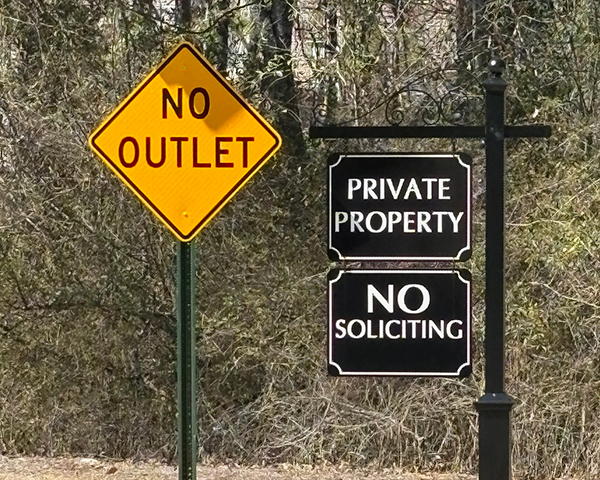
Every neighborhood is different, but these are the most common sign types HOAs lean on to improve safety:

neighborhood speed limit signs atlanta georgia

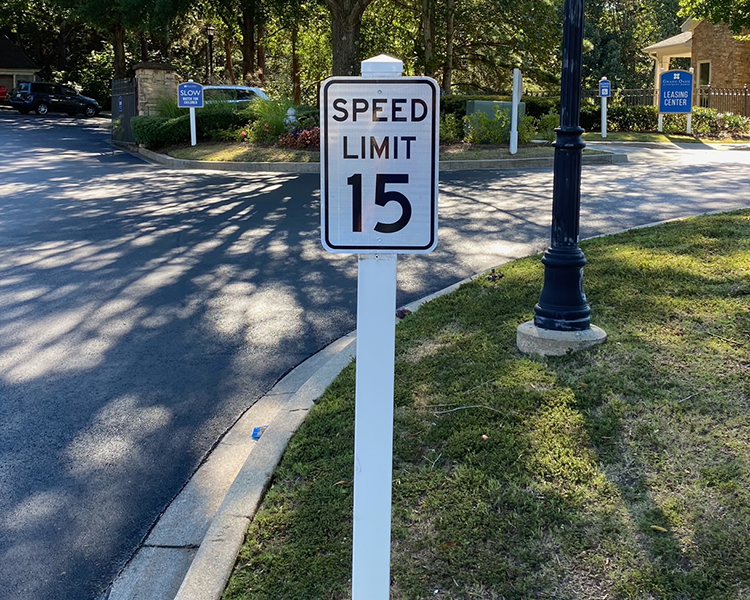
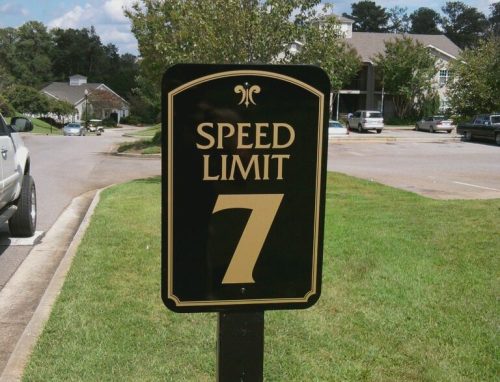
Speed Limit Signs

The baseline. Most effective at neighborhood entrances, long straightaways, and near amenities.

neighborhood speed limit signs routed

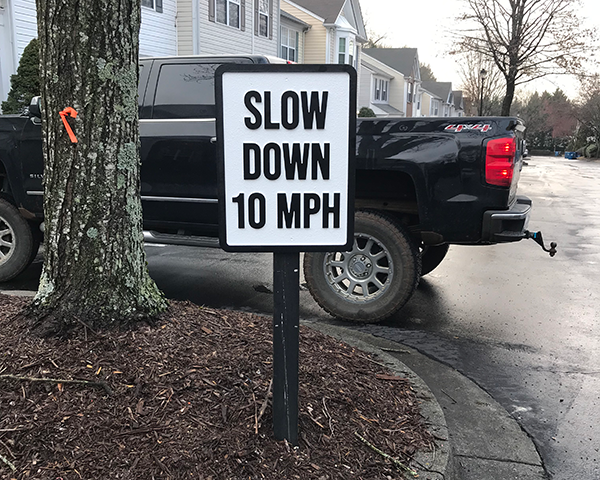
“Slow” reminders

Helpful where speeding is a known issue—especially on interior streets where drivers tend to pick up speed.

stop sign street name signs subdivison signs metro atlanta ga

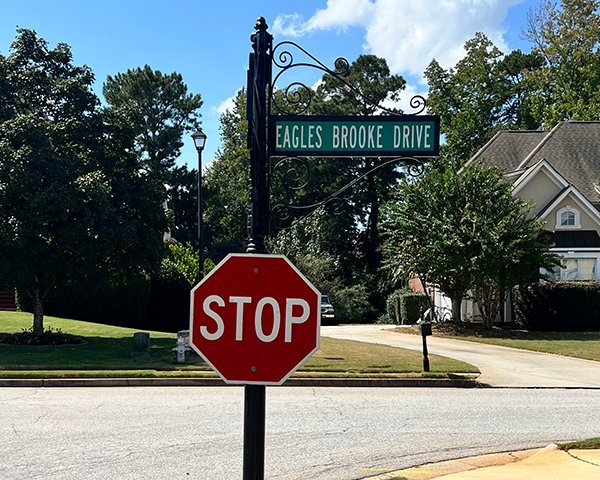
Stop signs and intersection control

Where confusion creates risk—blind corners, T-intersections, and areas with frequent rolling stops.

slow down children playing neighborhood speed limit signs

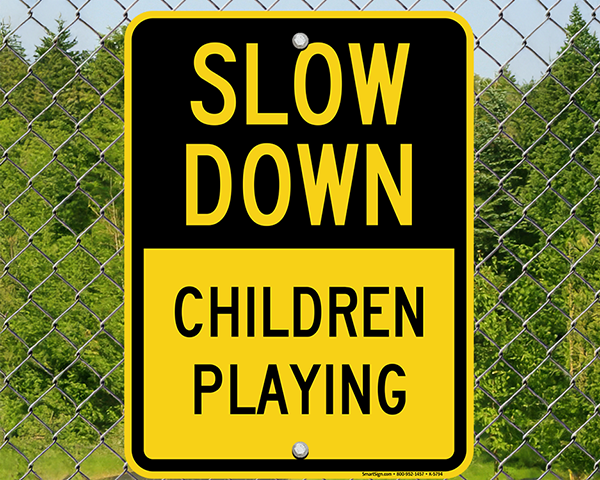
Children at play / pedestrian awareness signs

Best near parks, playgrounds, trail crossings, and clusters of family homes.

neighborhood safety signs metro atlanta ga

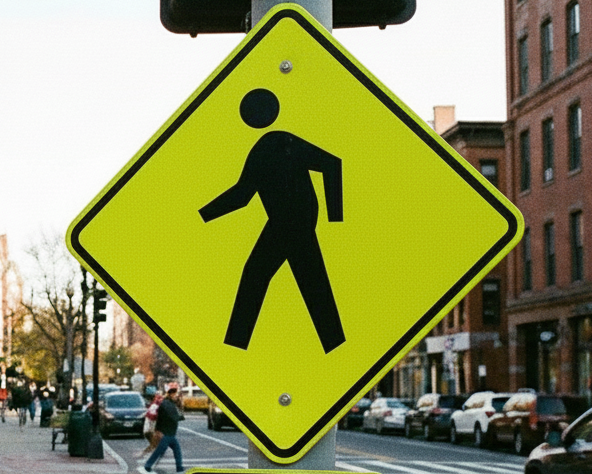
Crosswalk signs

Ideal near mail kiosks, clubhouses, pools, and any established crossing point with steady foot traffic.

neighborhood safety metro atlanta

Directional/ Wayfinding Signs

Underrated for safety. When drivers are not lost, they make fewer sudden turns, U-turns, and last-second stops.

Placement matters more than “more signs”

One of the most common mistakes is adding signs everywhere and hoping it helps. Too many signs become visual noise—and residents stop noticing them.
Instead, focus on decision points:
  • Neighborhood entrances (set expectations early)
  • Before intersections (not after)
  • Near parks, playgrounds, and amenity crossings
  • Along long straight roads where speed builds
  • At trail crossings and mail kiosk routes
If you’re not sure where to start, identify the top 2–3 hotspots residents mention most often. A small, targeted plan usually beats a scattered approach.
 

Keep it consistent with the neighborhood

A calm, well-managed neighborhood looks intentional. When safety signage is consistent—rather than a mix of mismatched signs added over time—it’s easier to maintain, easier to replace, and it simply looks better.
That consistency also helps residents take the message seriously.
Want a simple safety sign plan for your HOA?

Tell us where speeding or traffic concerns are happening (entrances, straightaways, intersections, near amenities), and we’ll recommend the most effective sign options and provide pricing.
Call or email us for a quote and a quick neighborhood speed limit signs and safety signs. 

For additional safety guidance, see the National Safety Council’s resources